


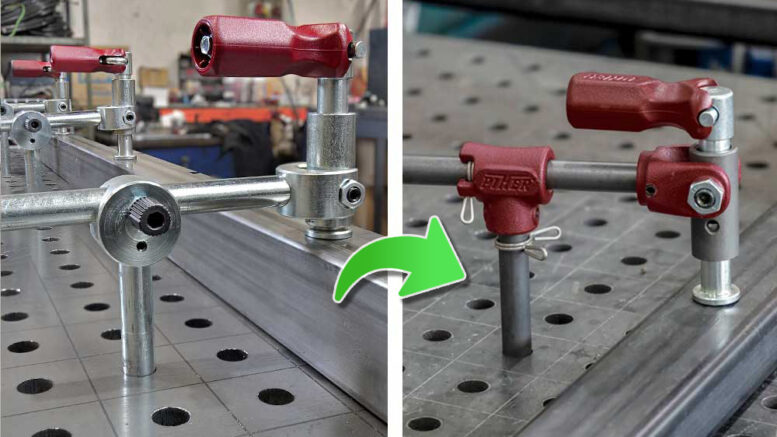
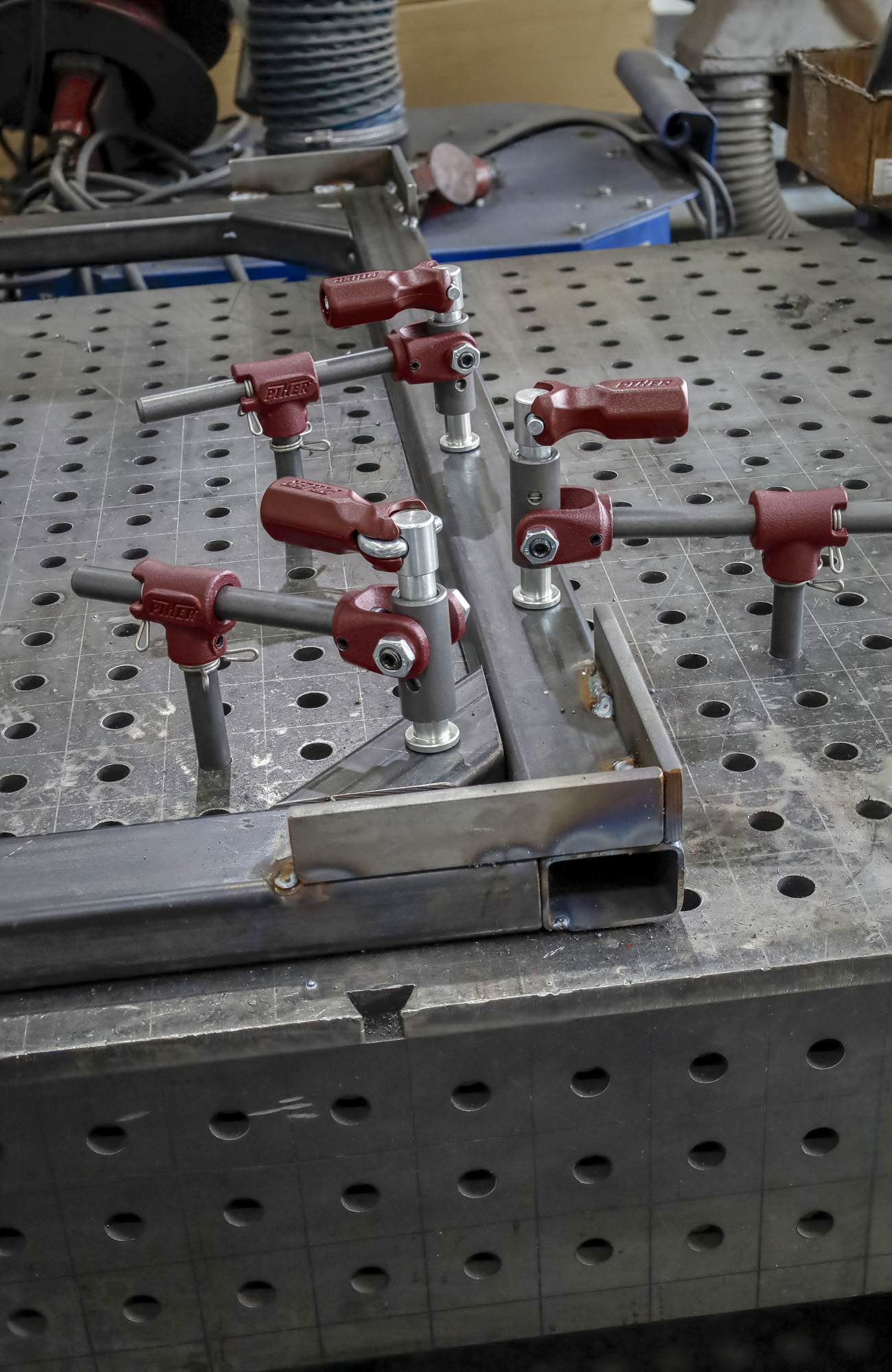
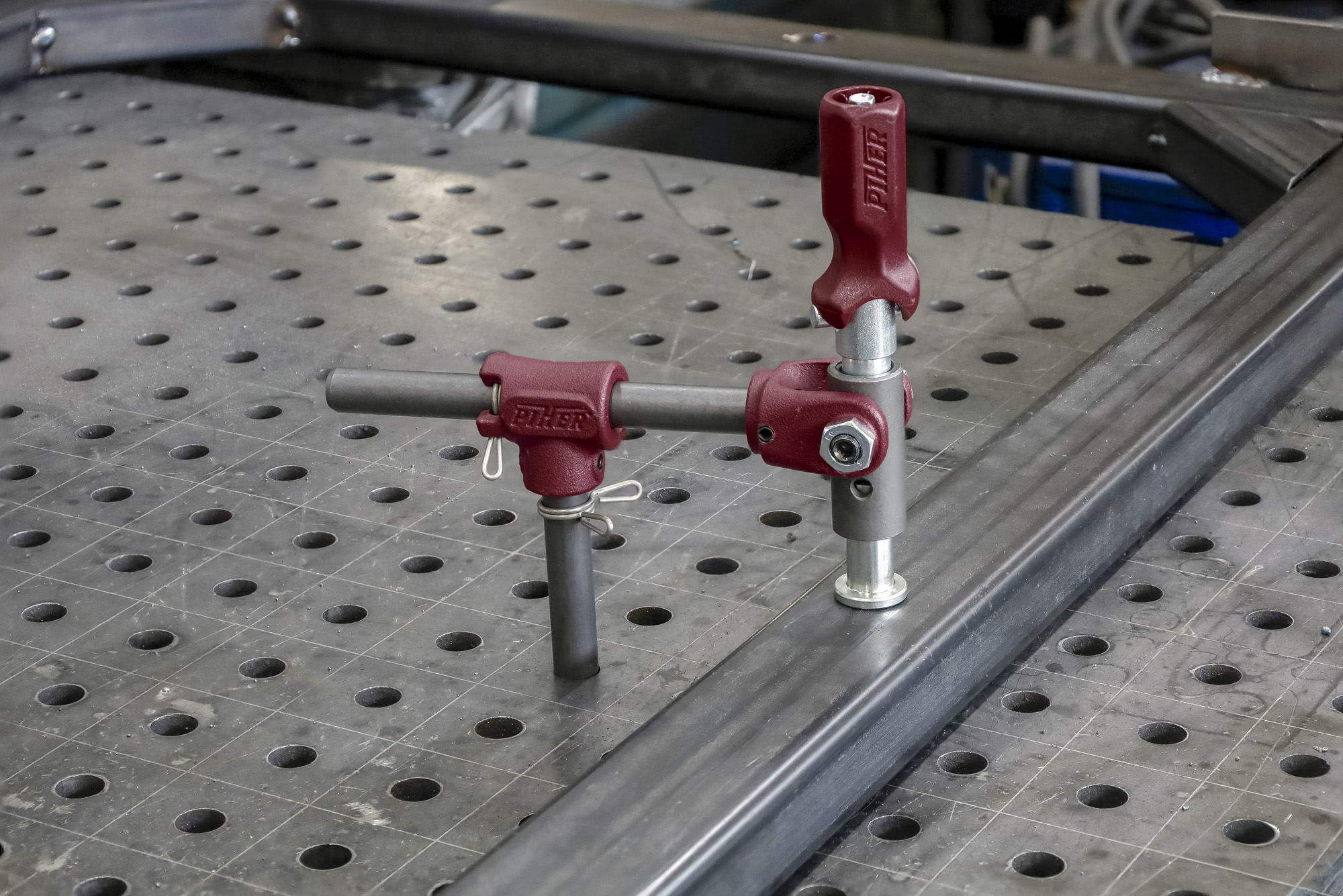
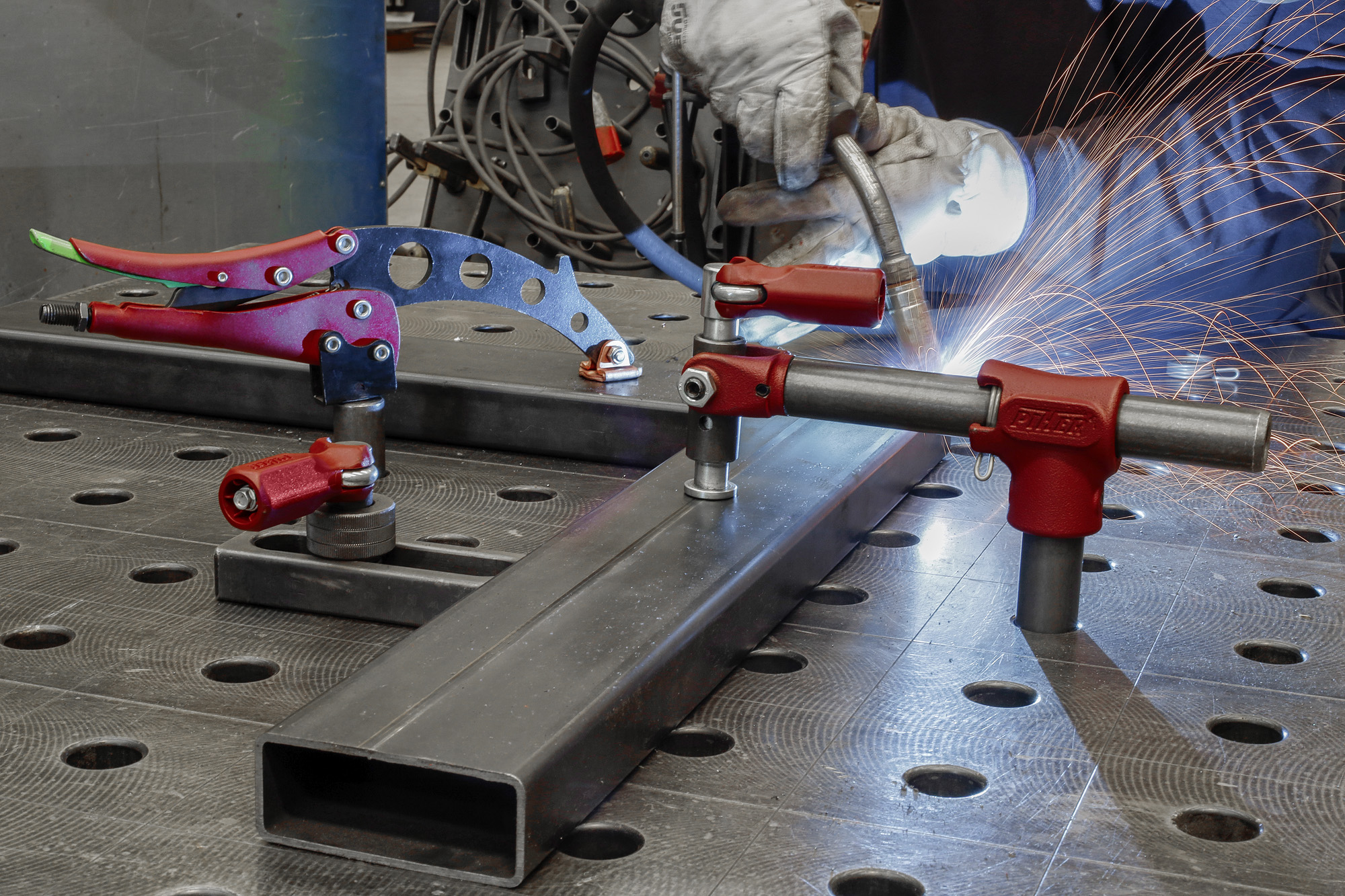
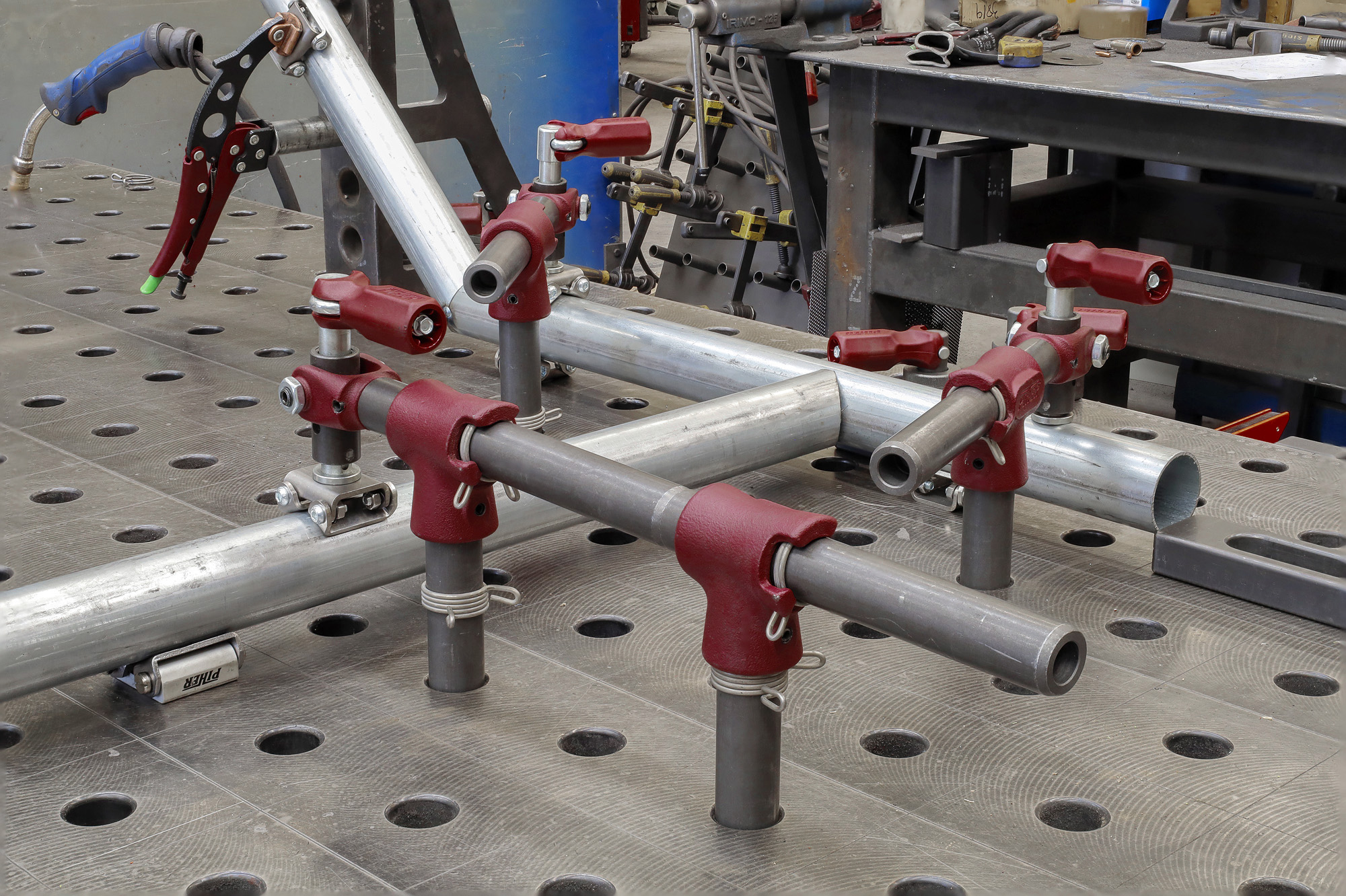
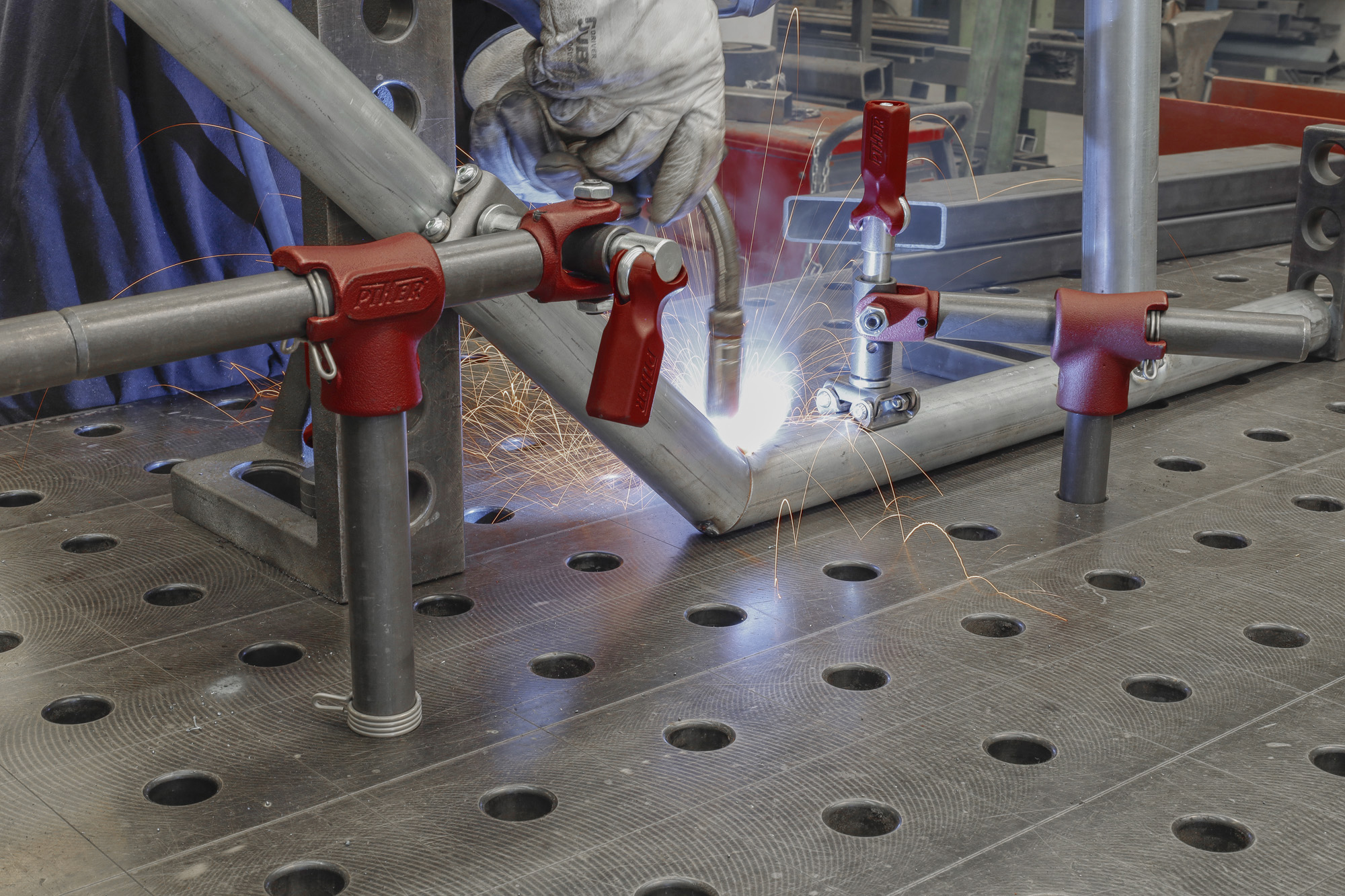
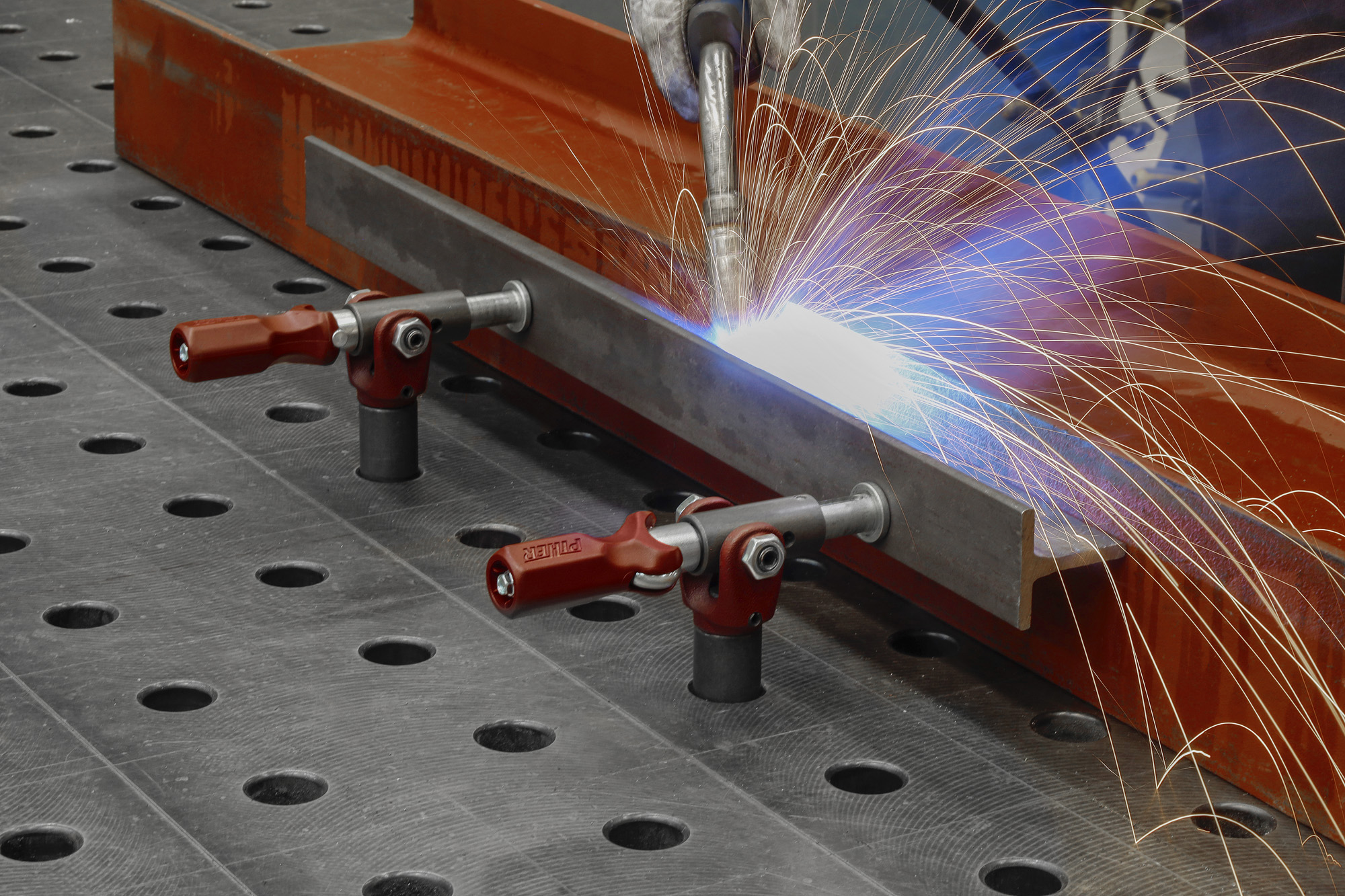
At PIHER, we’ve been listening to metalworking professionals for decades. We knew that the TCP family of plunger clamps was already an essential tool for working on welding tables with grid holes. However, in our commitment to continuous improvement, we’ve redesigned this range to take its functionality and sustainability to the next level.
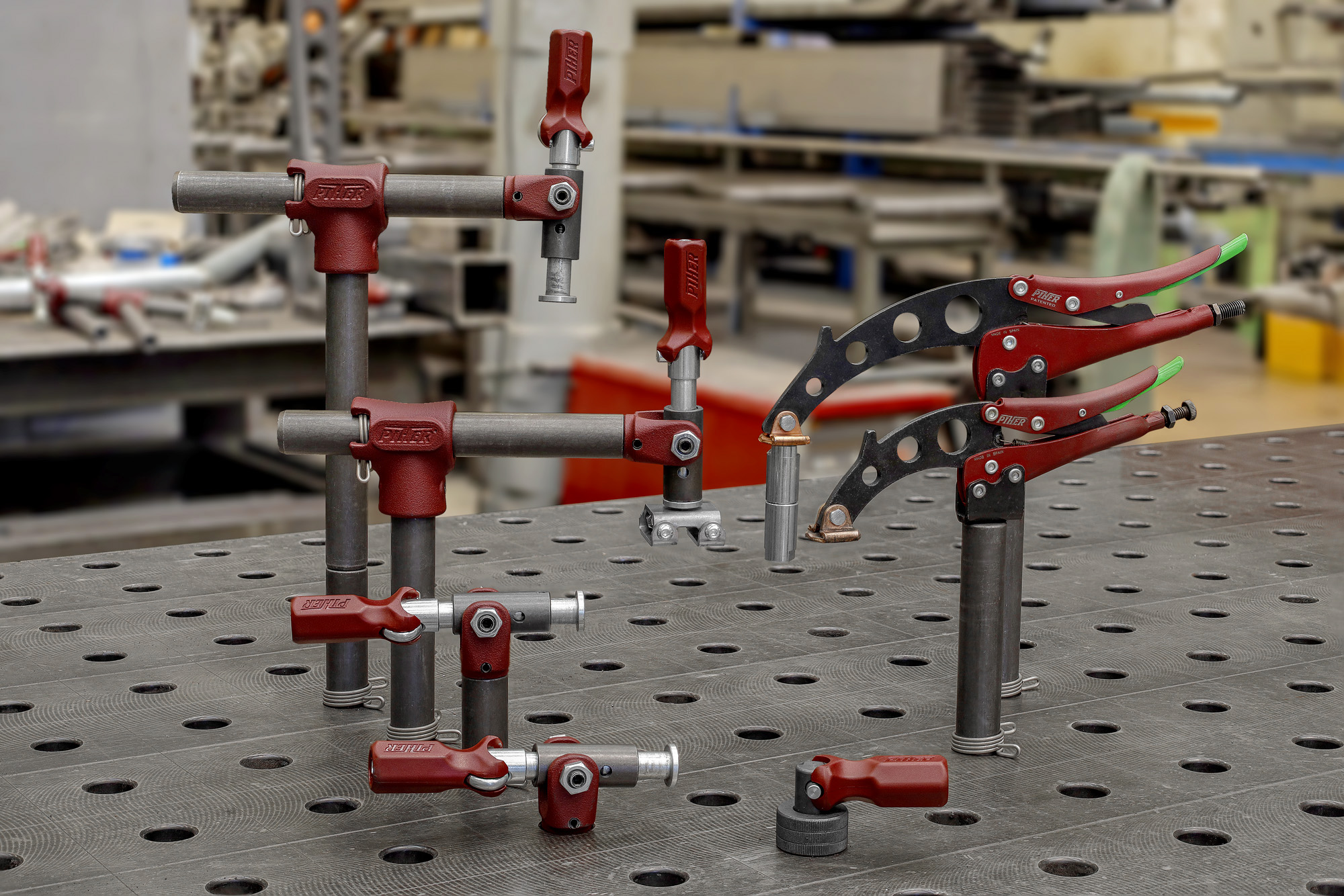
With the latest update of the smallest model for 16mm diameters, we’ve completed the update for the three standard table sizes: Ø 16 mm, Ø 22 mm, and Ø 28 mm.
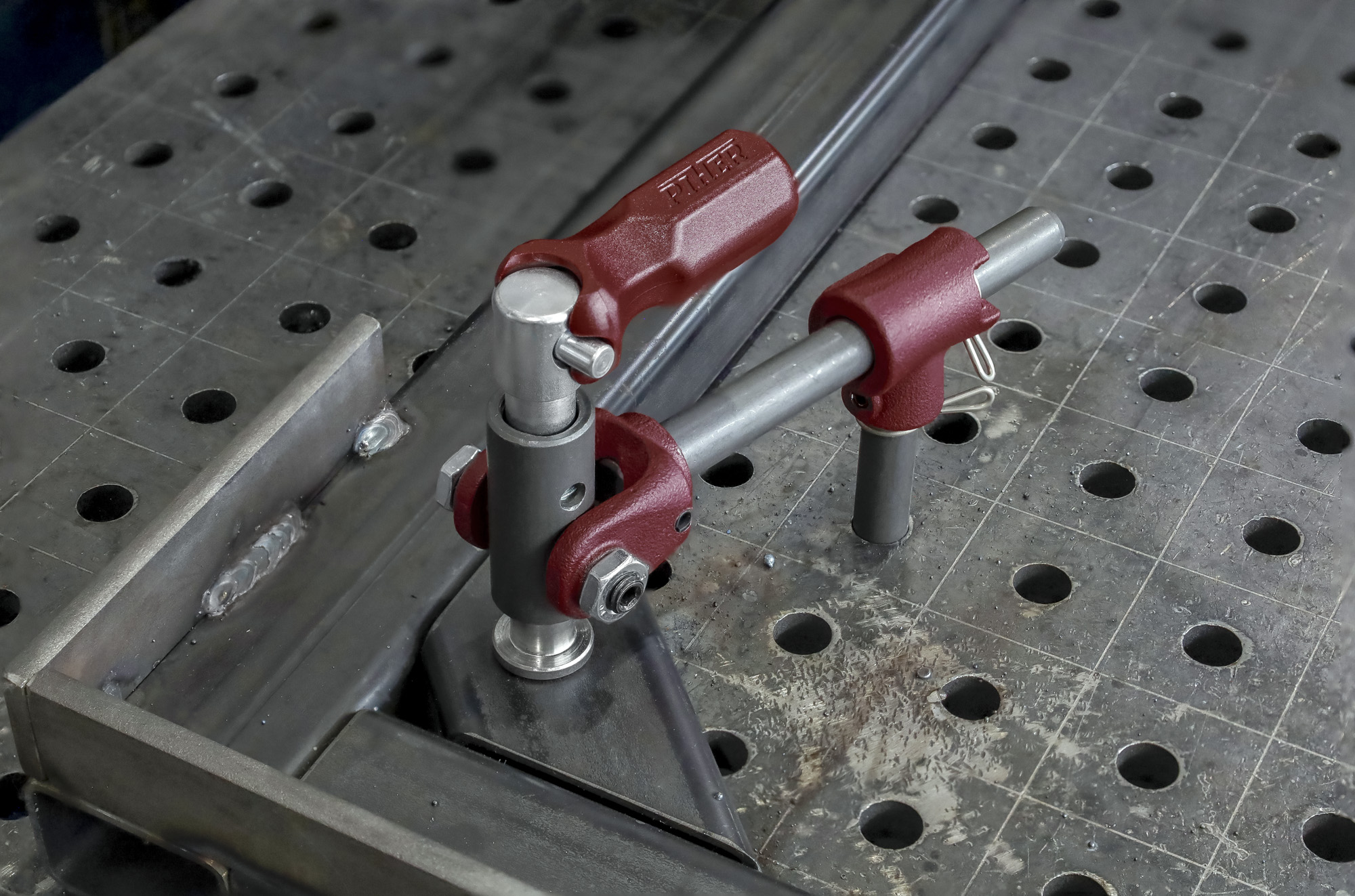
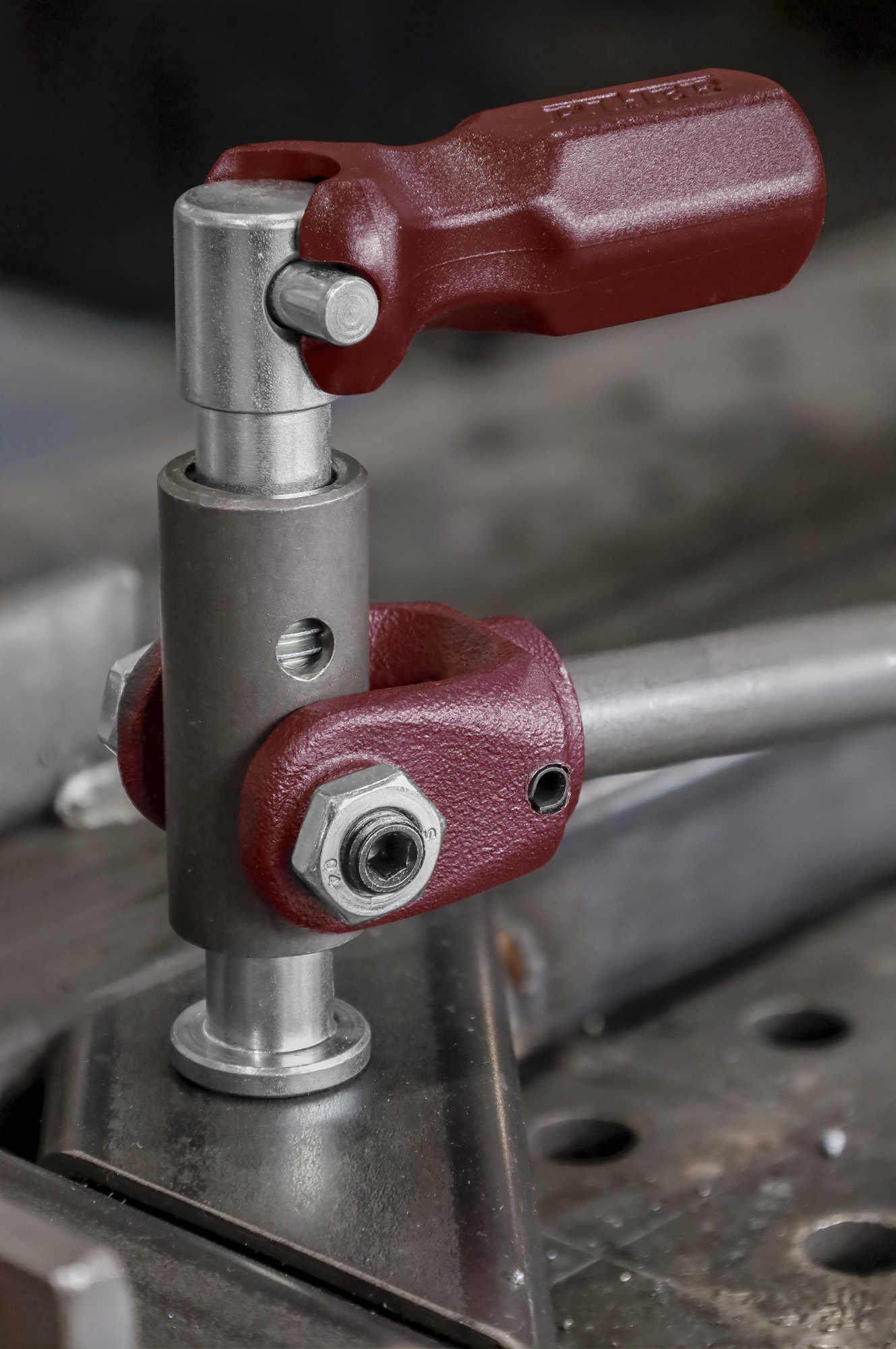
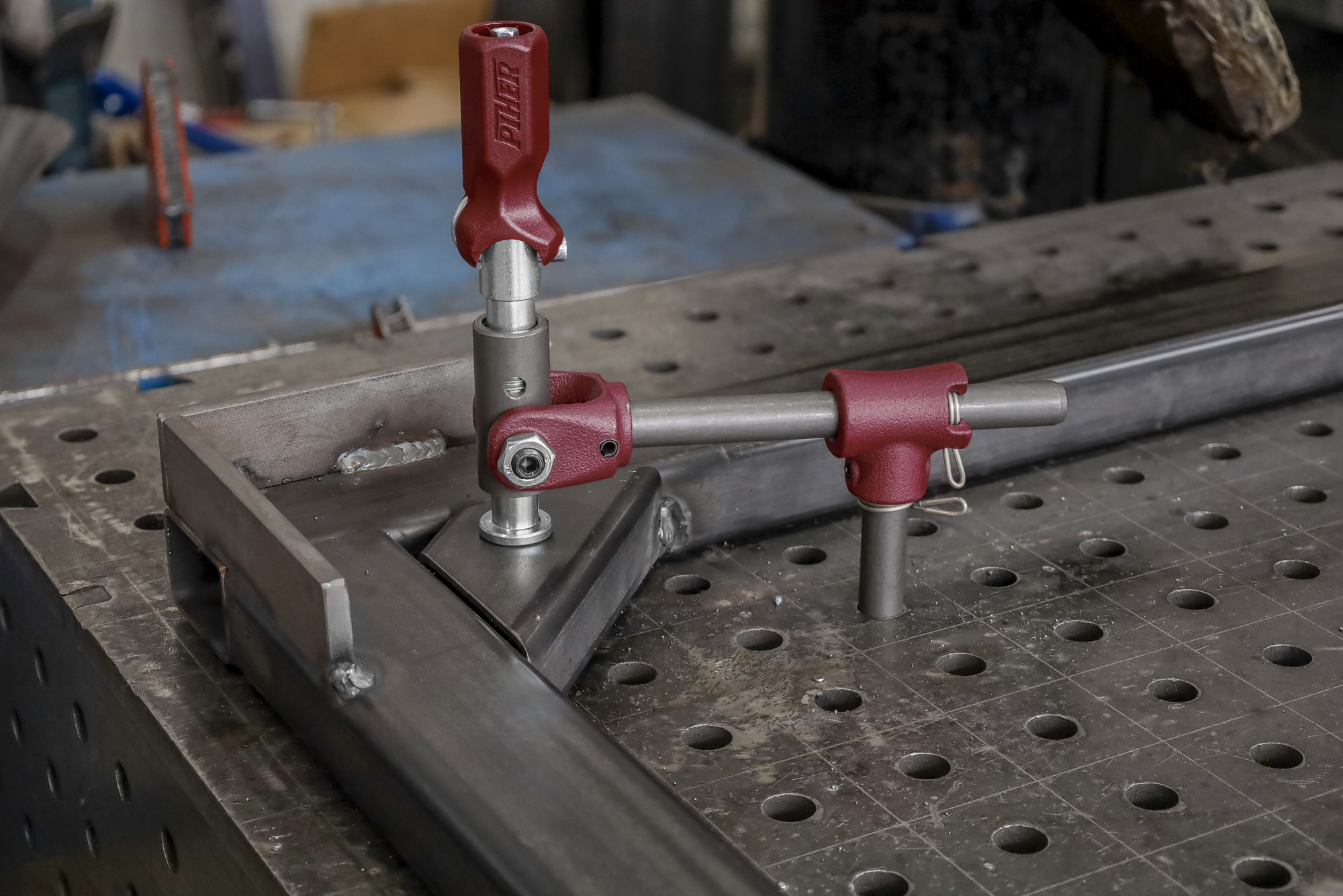
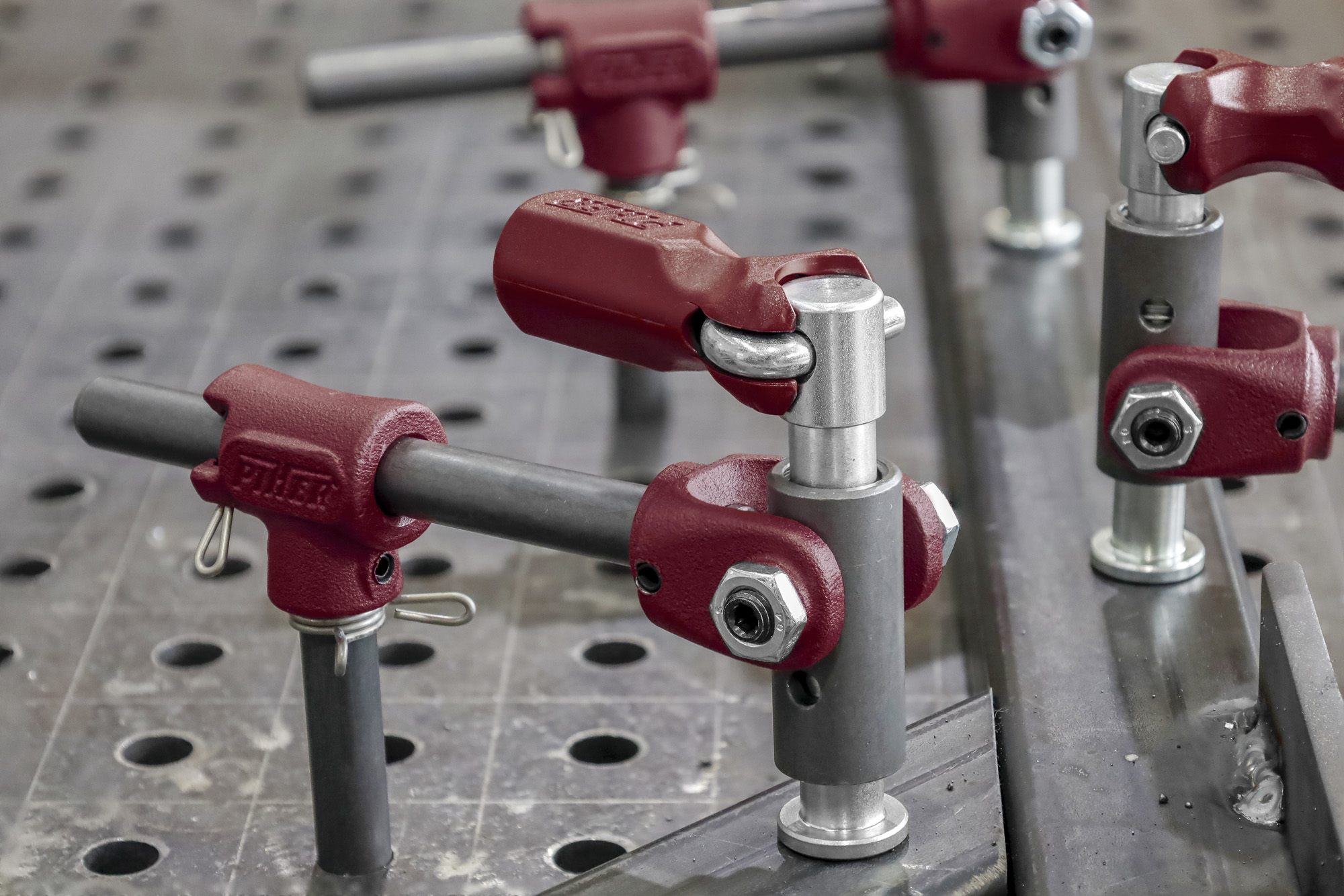
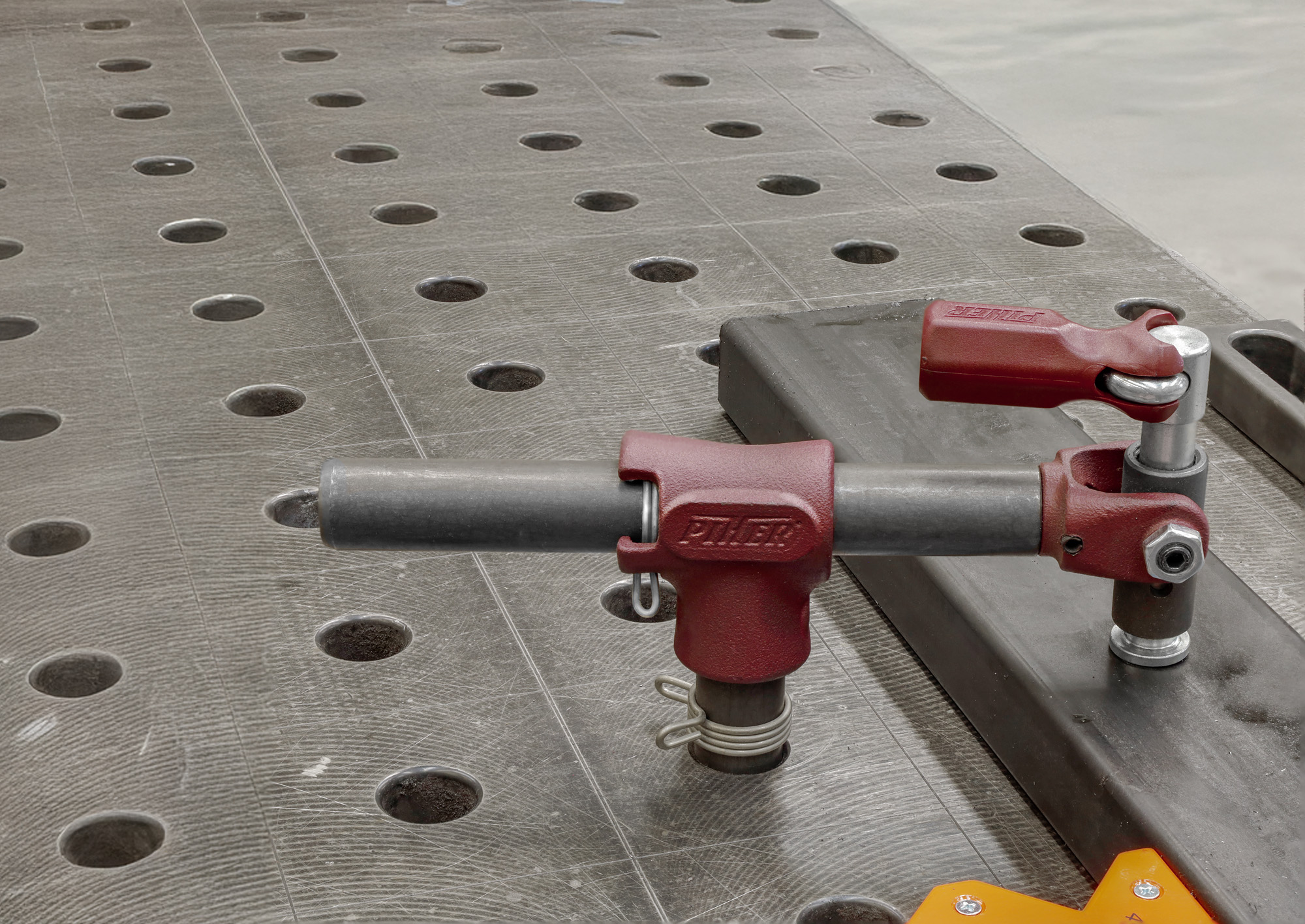
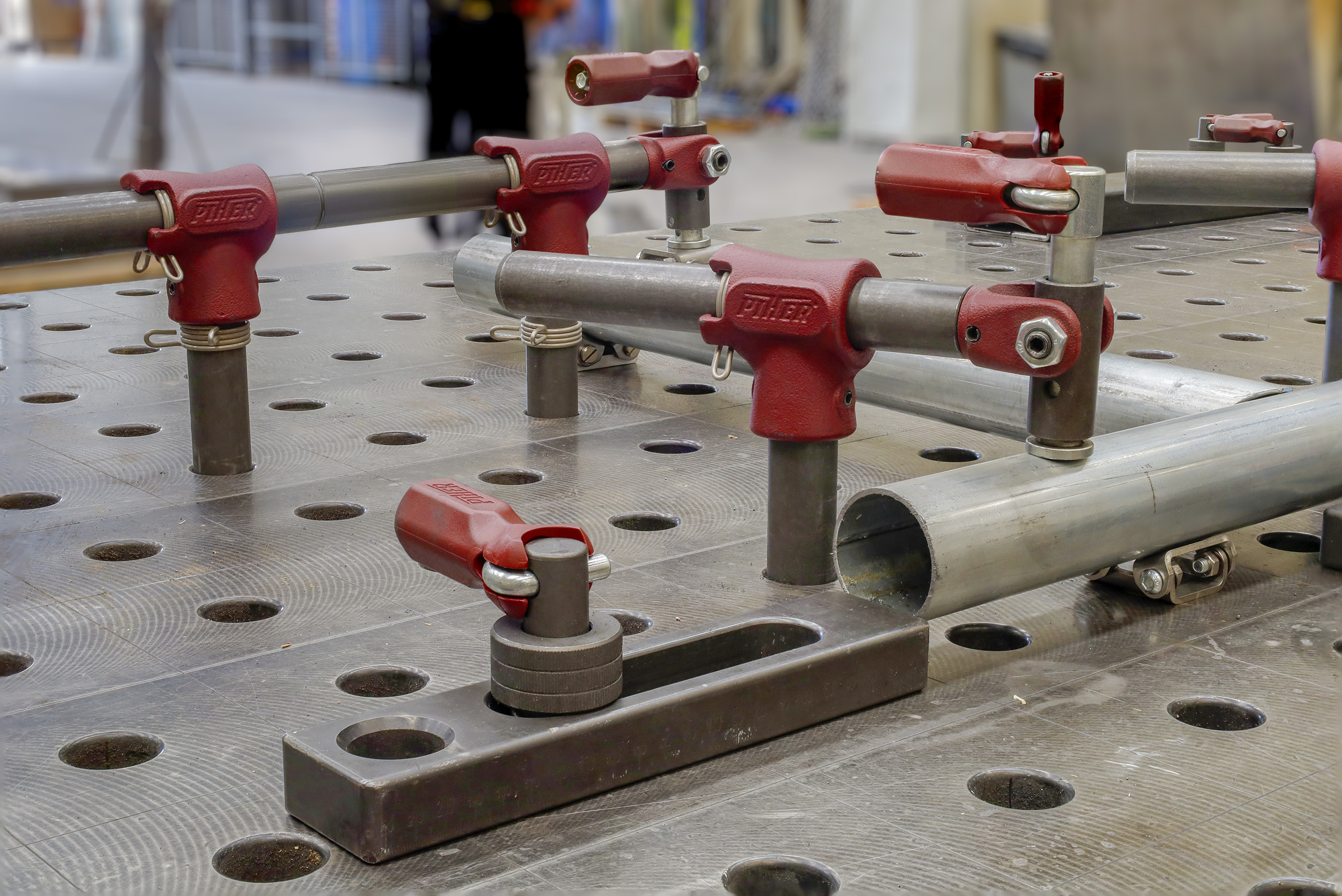
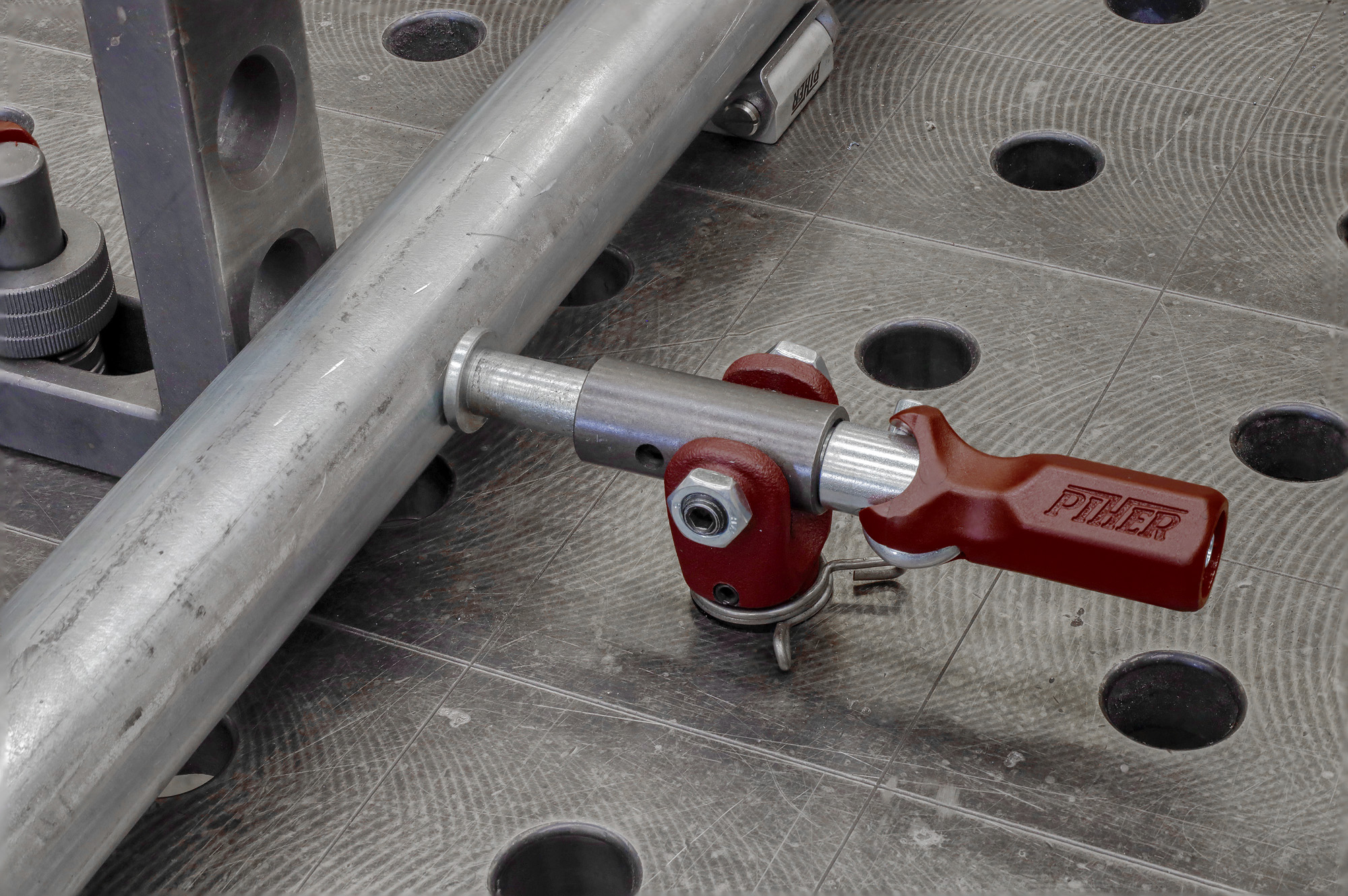
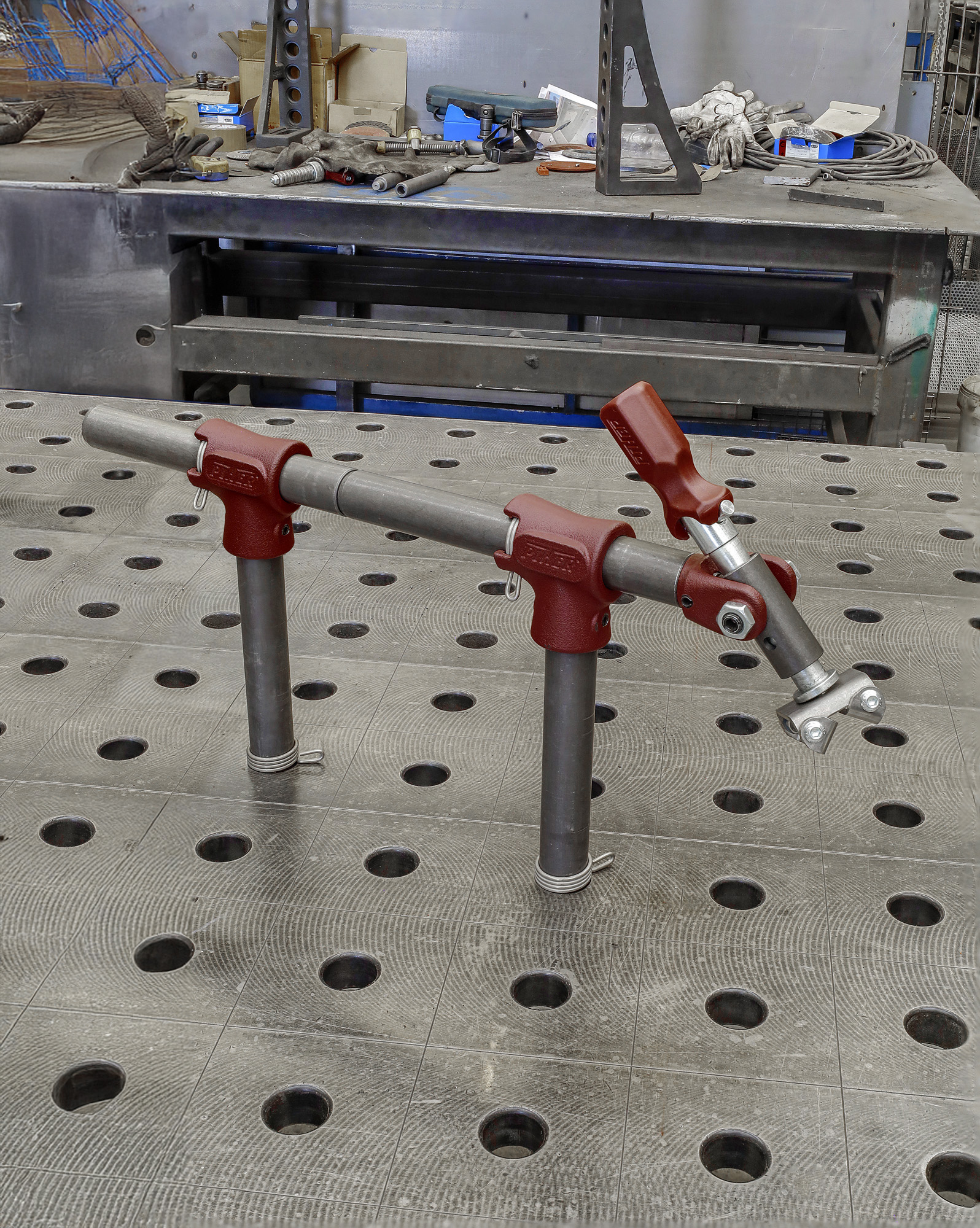
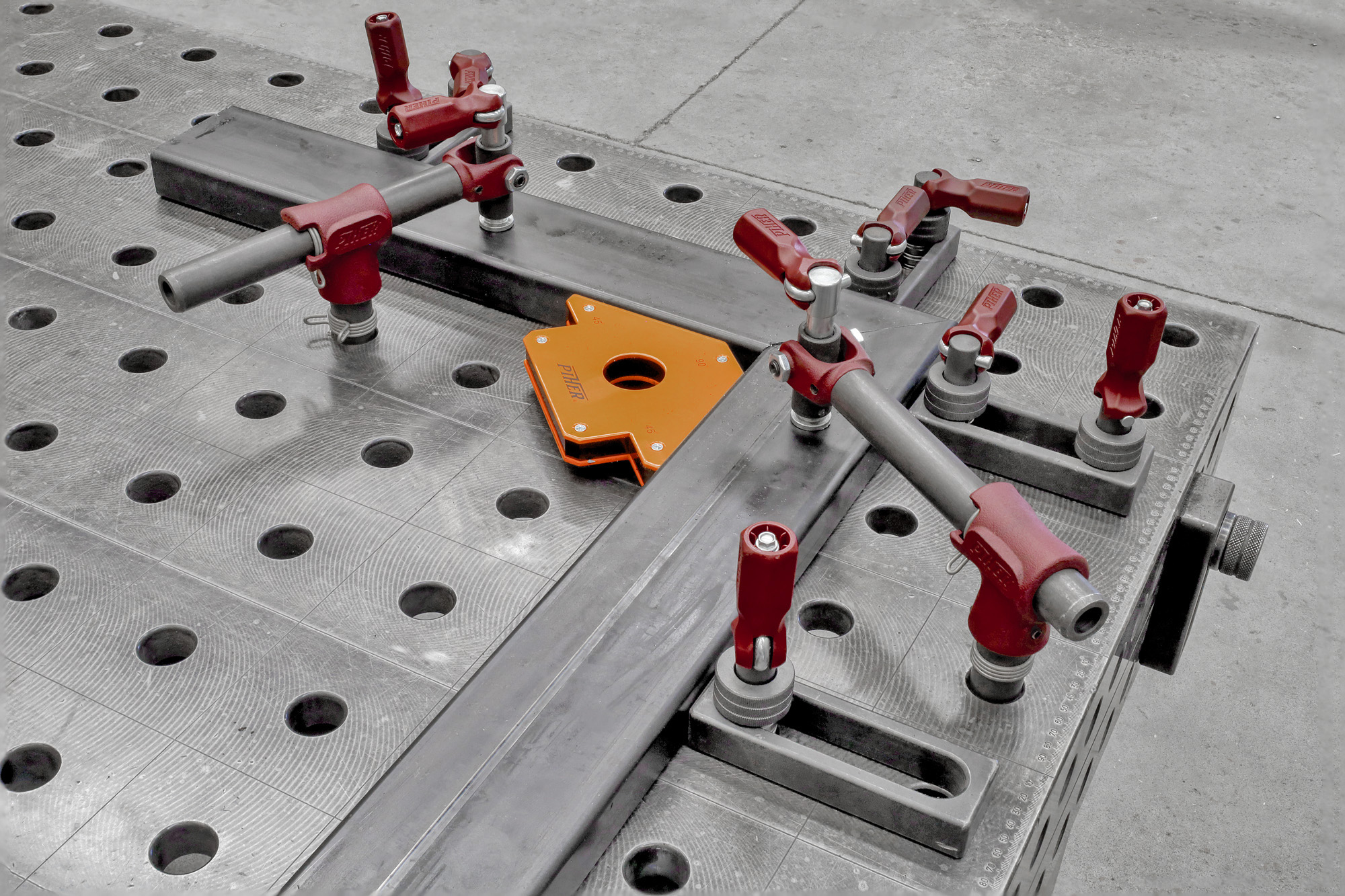
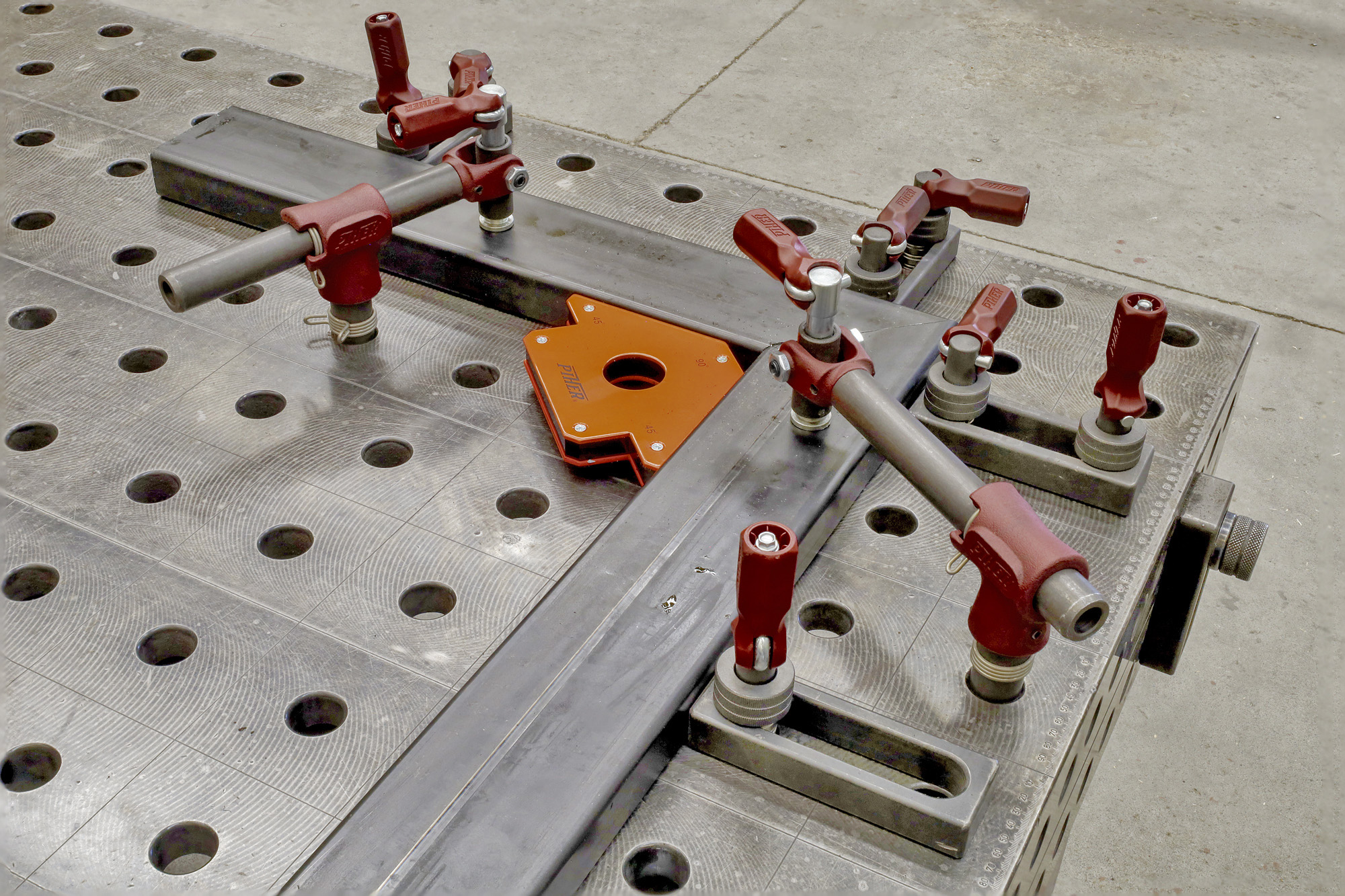
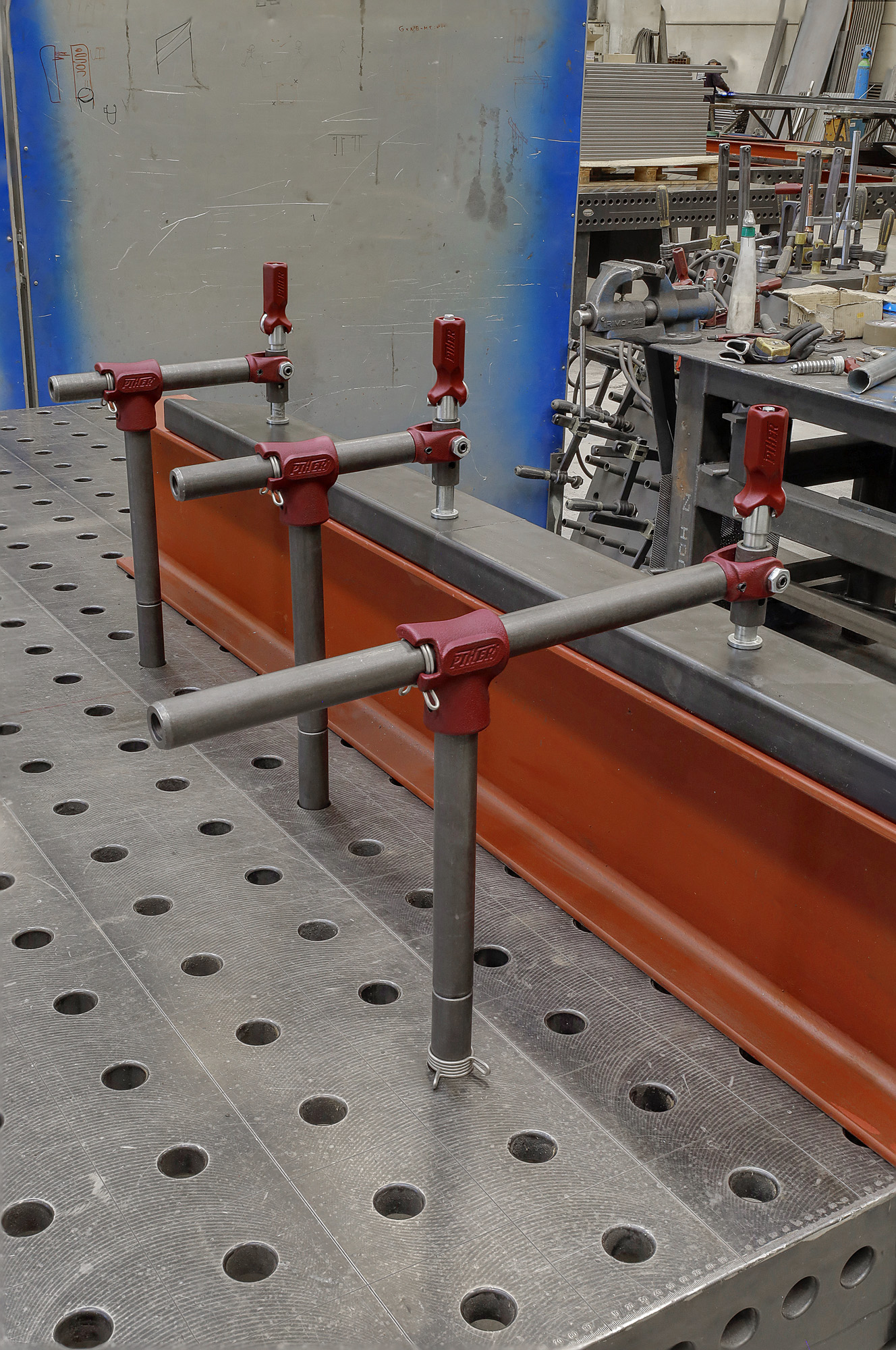
The most obvious change is that we’ve replaced the ball joints with forged steel ones. This new design, as we’ll see, provides a greater tilt angle and improved ergonomics. And the bars are now made of carbon steel, with a phosphated finish instead of zinc plating.
Let’s take a closer look!
1. Phosphate Finish and Dry Oil: an environmentally conscious choice
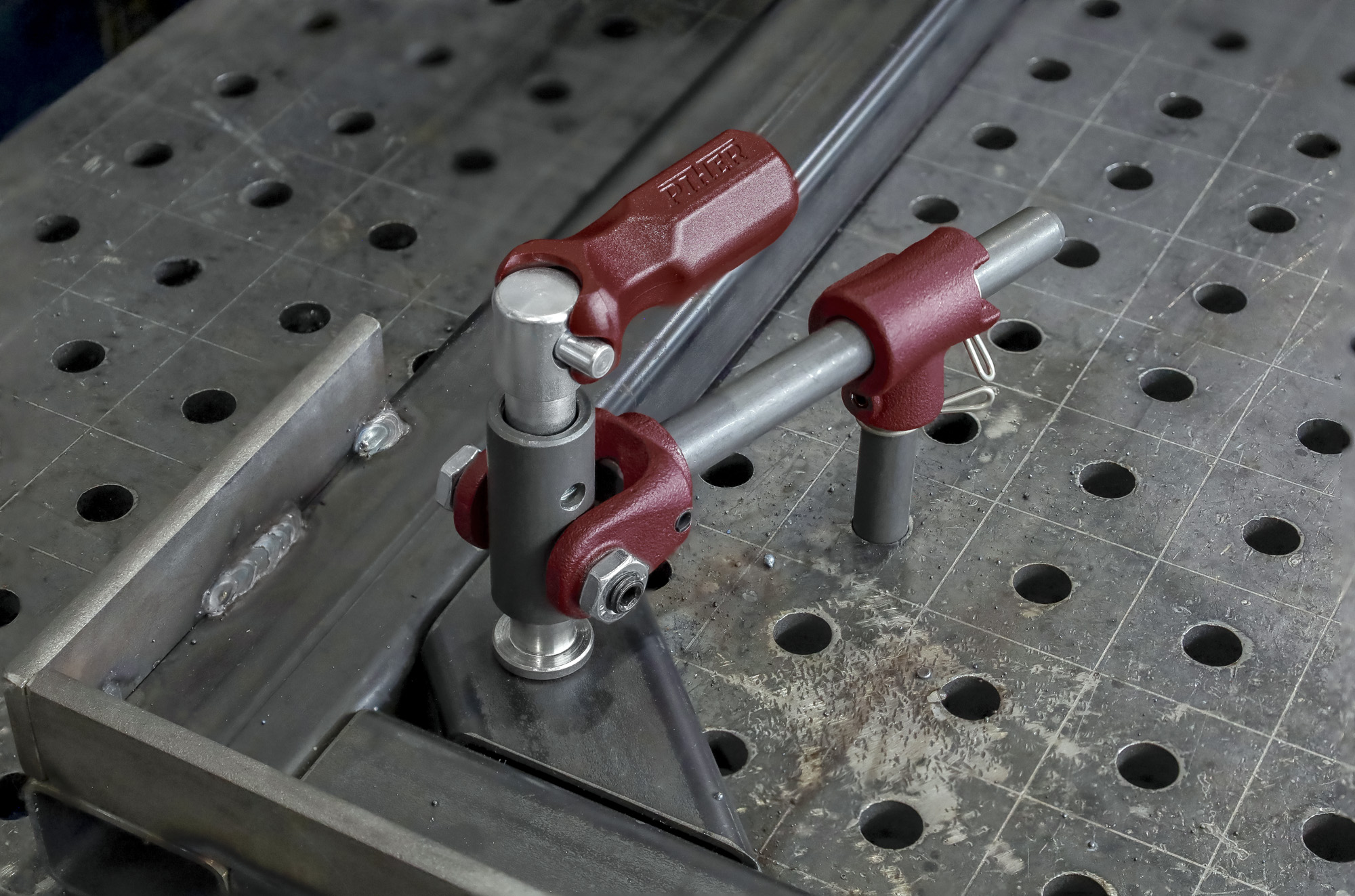
At first glance, you’ll notice a significant aesthetic change: we’re saying goodbye to traditional zinc plating on bars and bolts, replacing it with a phosphate finish and a final dry oil treatment.
Why did we make this decision?
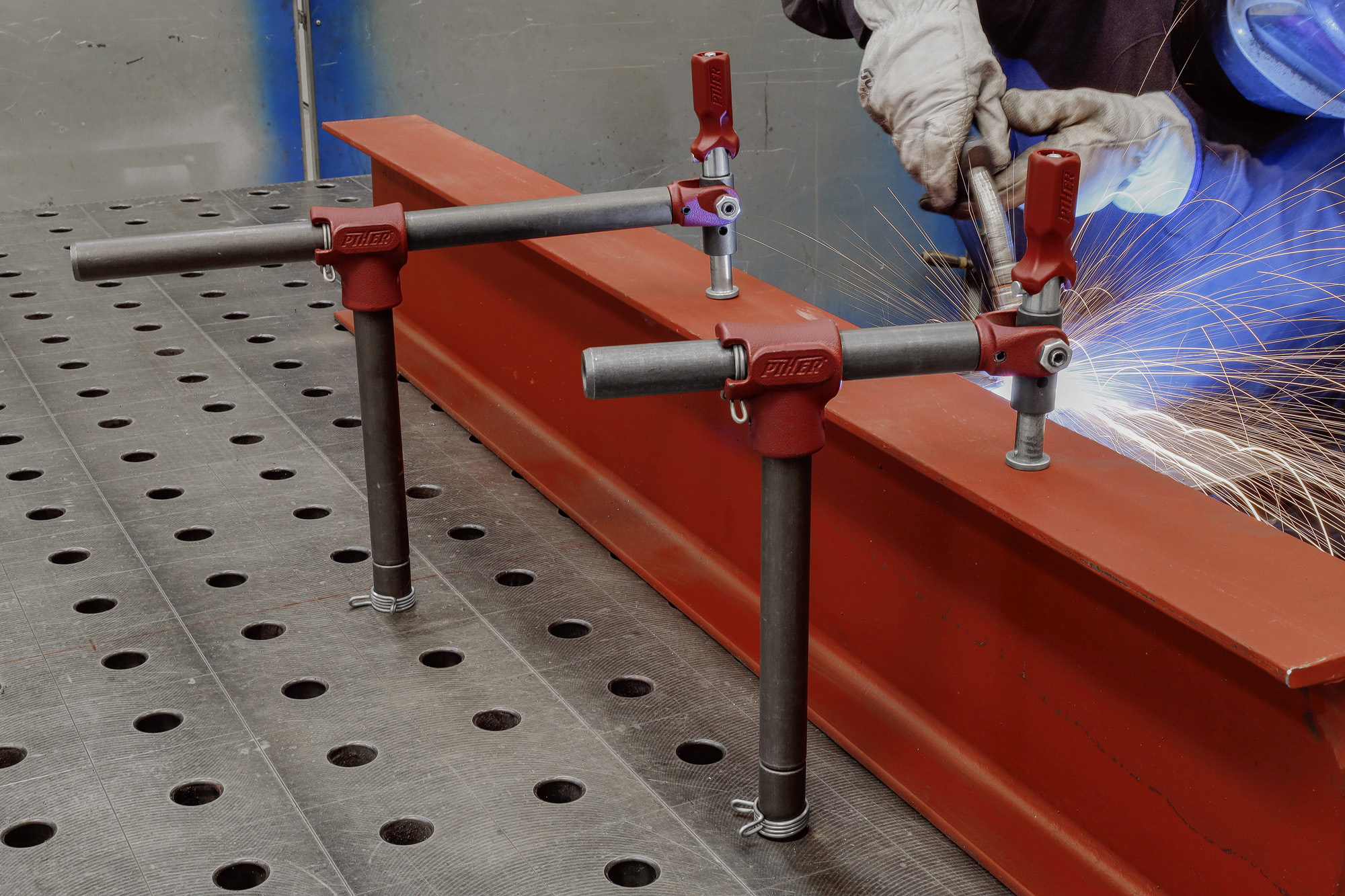
- Protection tailored to the workshop: While zinc plating offers corrosion protection designed for outdoor use, the reality is that welding table work is done indoors (workshops and manufacturing plants). Phosphating with dry oil provides the precise protection required in this environment without the need for excessive residue in the manufacturing process, and it’s a finish that prevents welding spatter from adhering to the material.
- Reduced environmental impact: The industrial chrome plating process generates a high ecological footprint of heavy metals. Replacing it with phosphate coating allows us to drastically reduce emissions and polluting waste in our production.
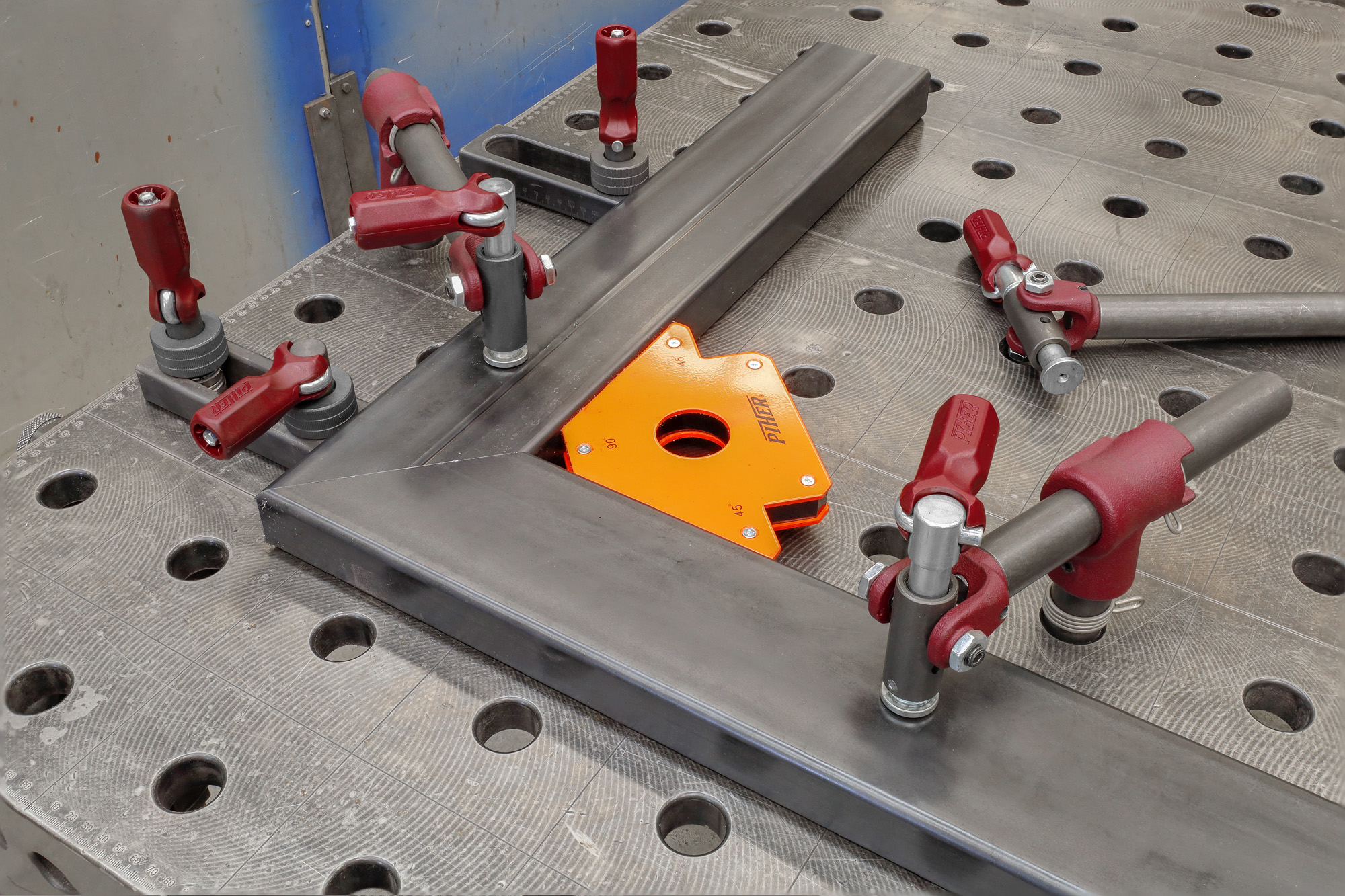
2. From 40° to 90° of tilt: total freedom of attack.
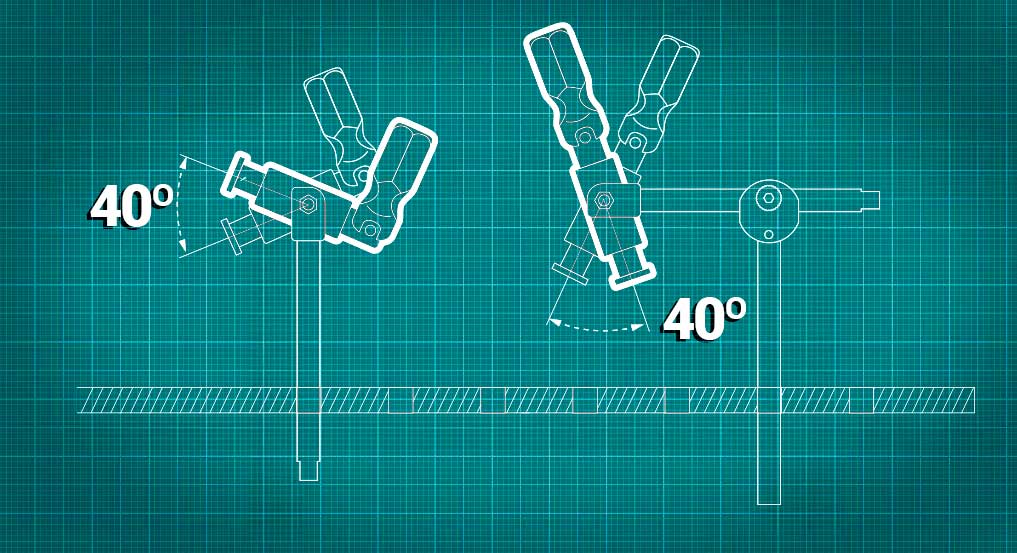
We’ve replaced the previous parts with redesigned, ductile iron components, which not only increases the overall strength and resistance to intense stress, but also dramatically expands the tilting range of the clamping device:
-
Before: Tilting limited to 40°.
-
Now: An extended range of up to 90° of rotation.
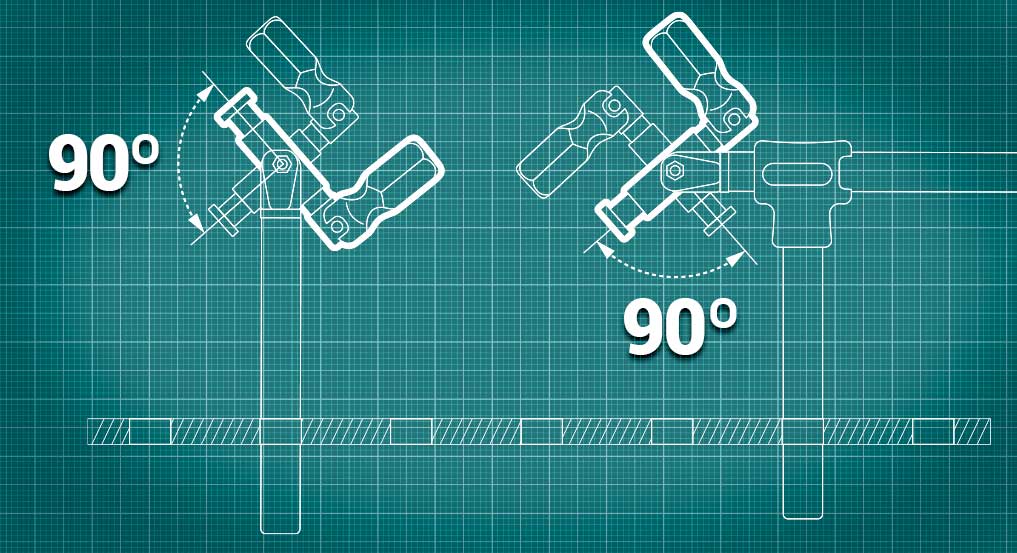
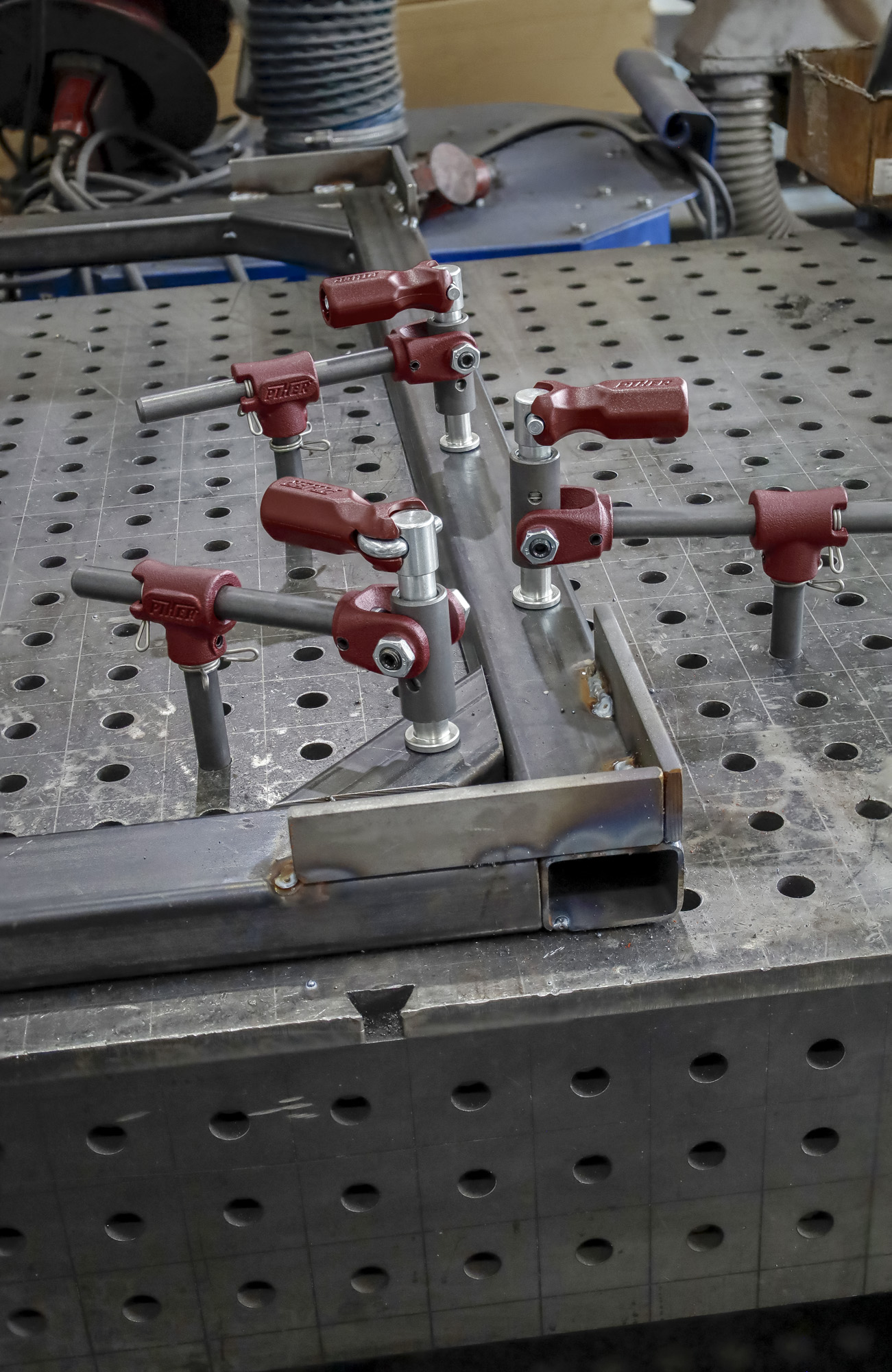
With this greater angle of attack, you can clamp complex workpieces directly against the table or side stops with absolute firmness and without straining the tool.
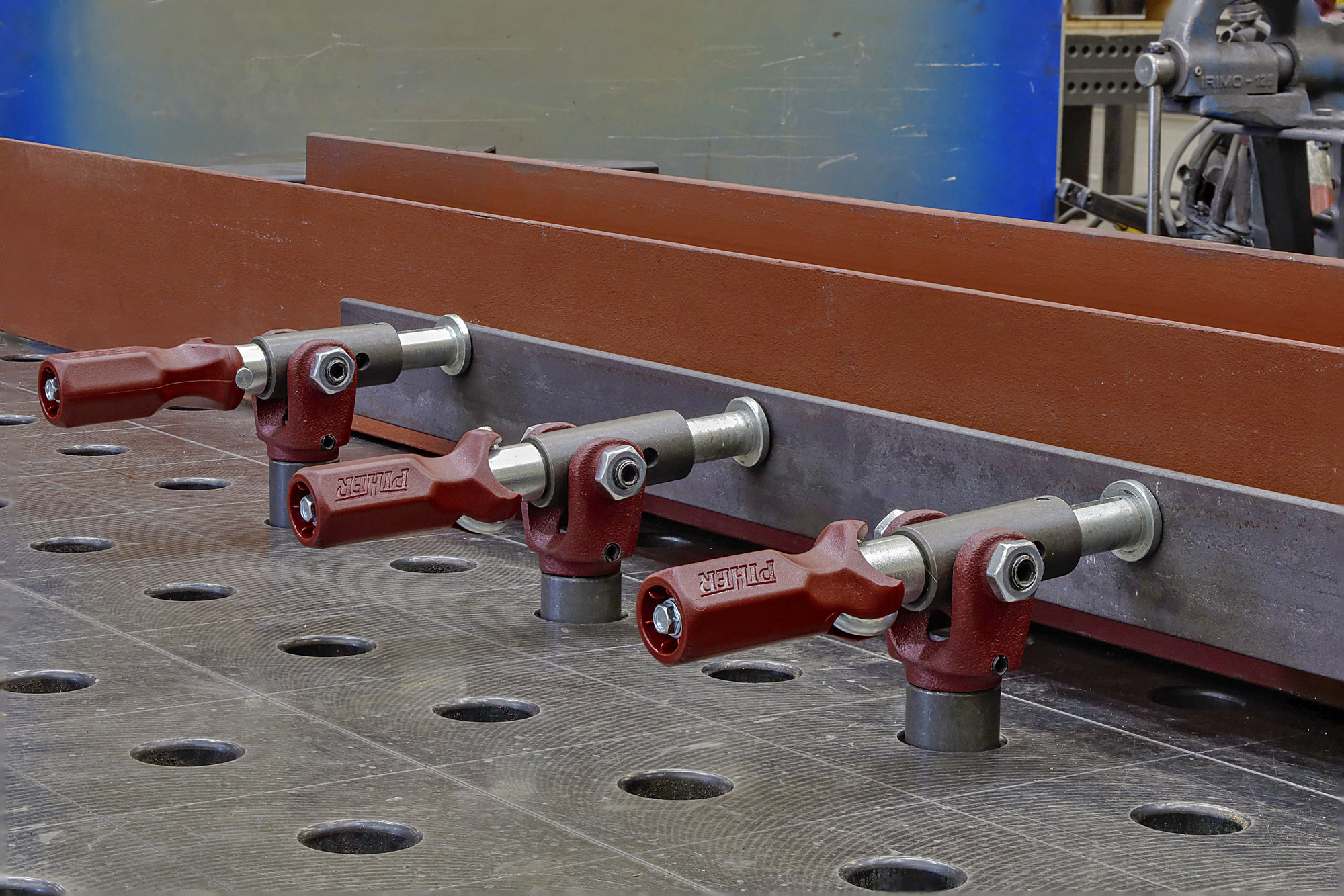
3. New spring stop with larger fins: goodbye to nuts.
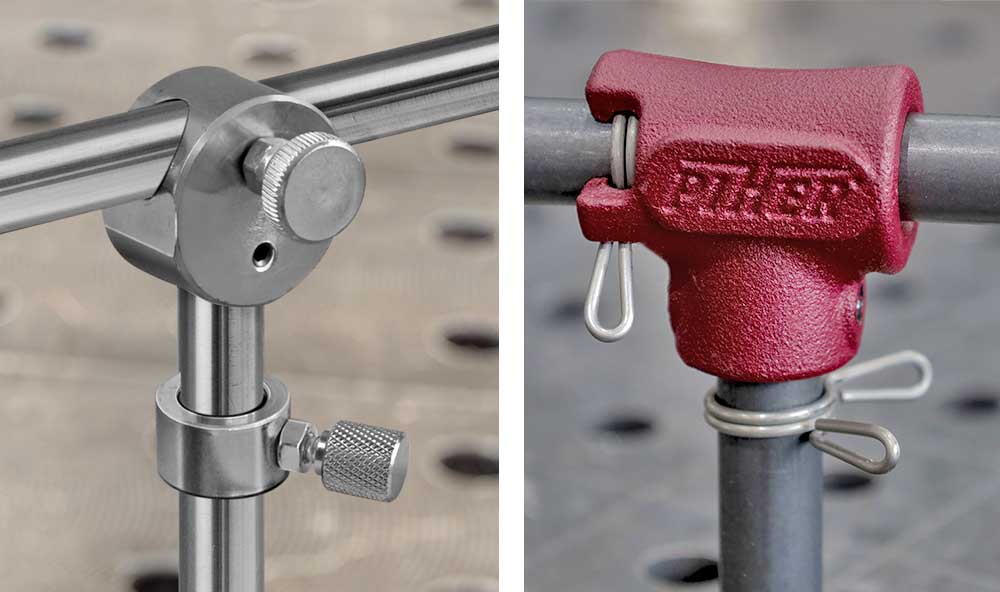
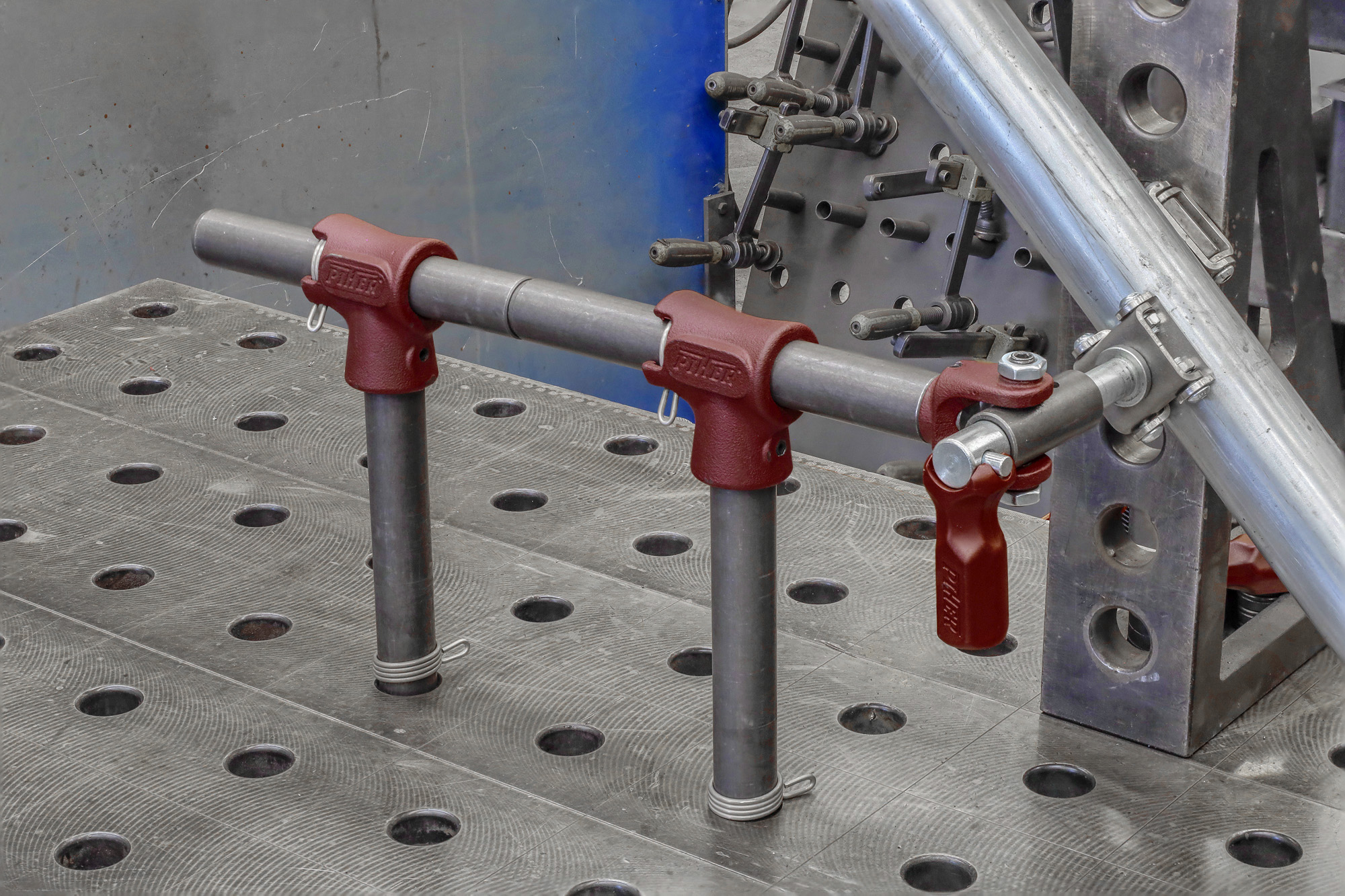
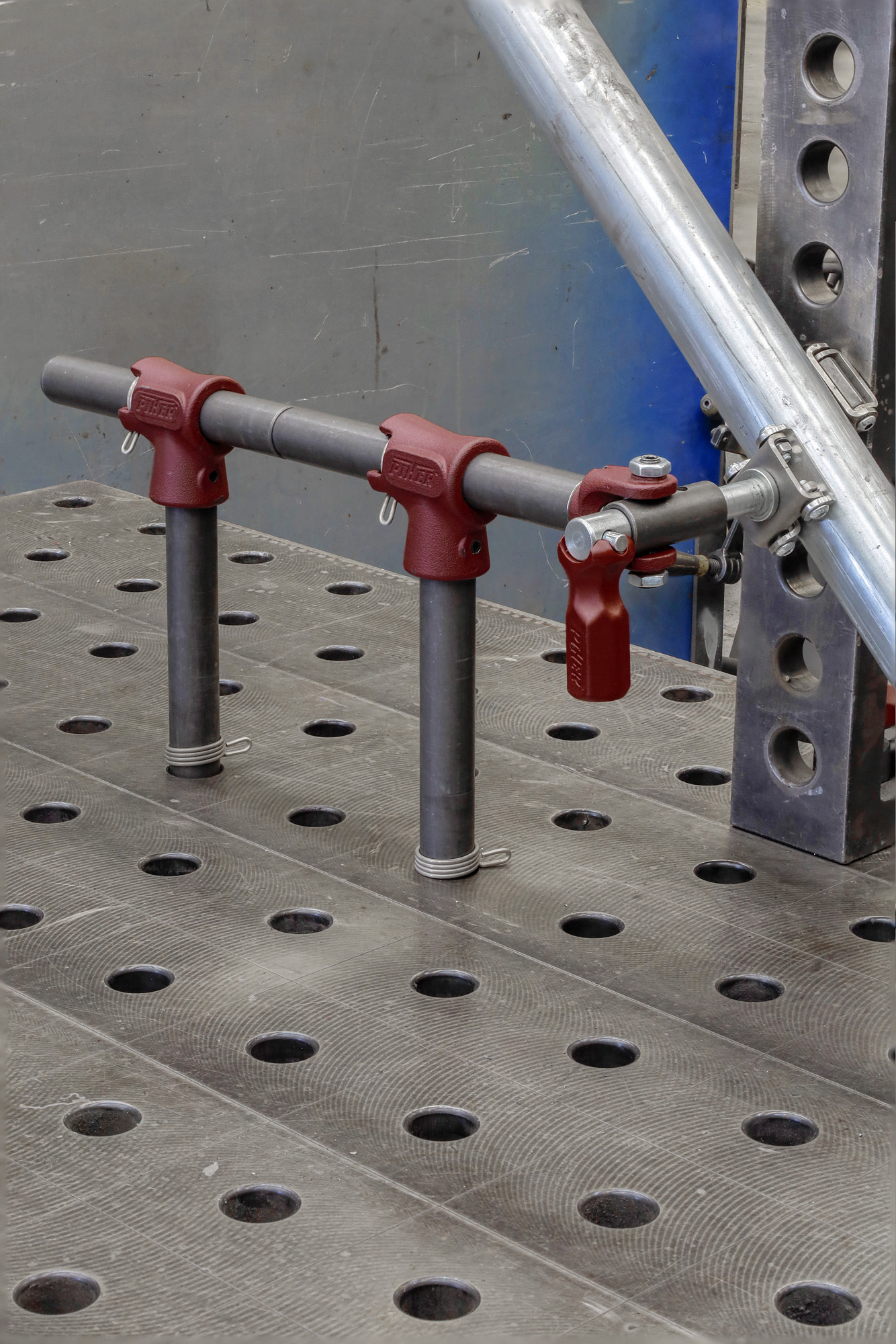
In the workshop, every second counts, and working with welding gloves doesn’t always make fine work easier. That’s why we’ve eliminated the traditional bar stop screw and replaced it with a high-tension spring system with wide fins.
- Easy operation with gloves: The large fins allow you to comfortably press and move the stop without having to remove your protective gear.
- Constant tension: The spring remains under constant tension. You no longer have to loosen and tighten screws every time you readjust the vertical or horizontal position of the bar; simply press the fins, slide, and release.
4. Accesorios and spares parts.
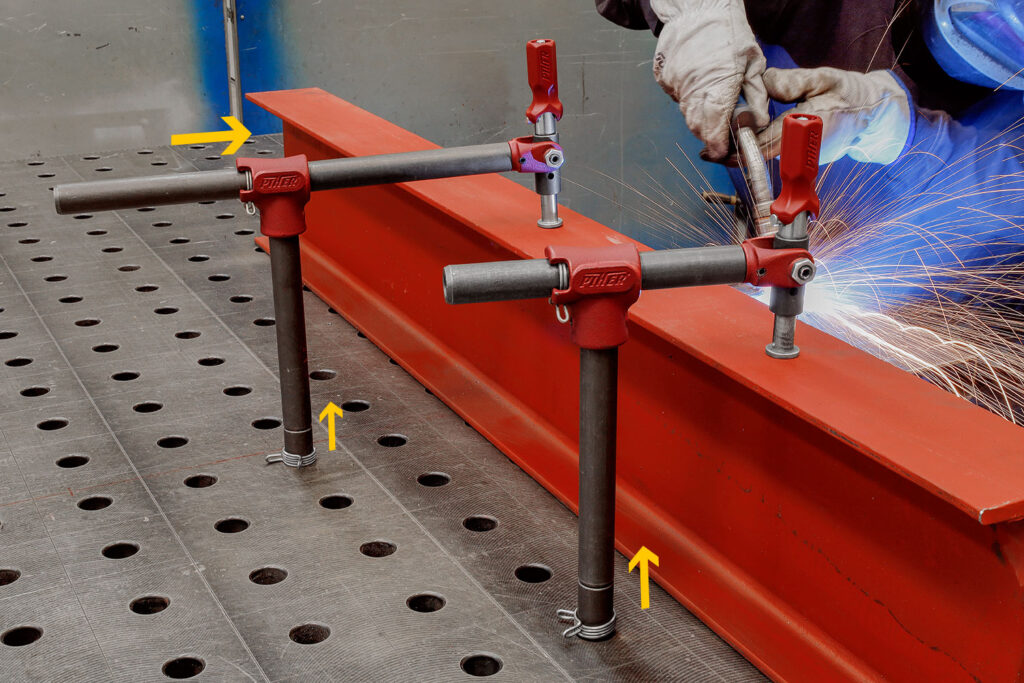
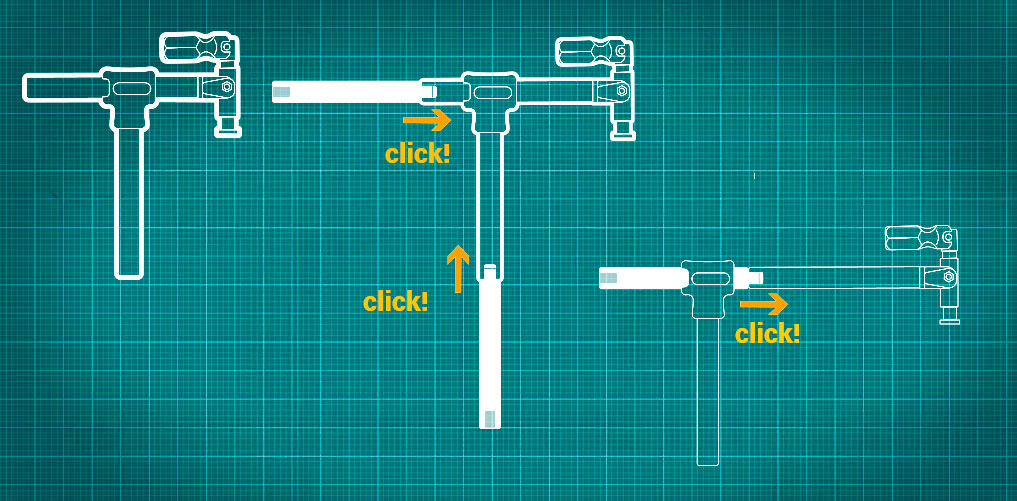
- New extensions: The Ø 22 and 28 models can be fitted with 20 cm extension bars on both the vertical and horizontal arms with a single click. We haven’t developed this system for the Ø 16 model because the bar diameter doesn’t allow it; it weakens the material considerably and causes problems. For this reason, we are looking for another solution for this size.
- Spare parts: All models are designed with easy repair in mind, so we have spare parts available for all models, including arms, pressure systems, springs, handles, etc.
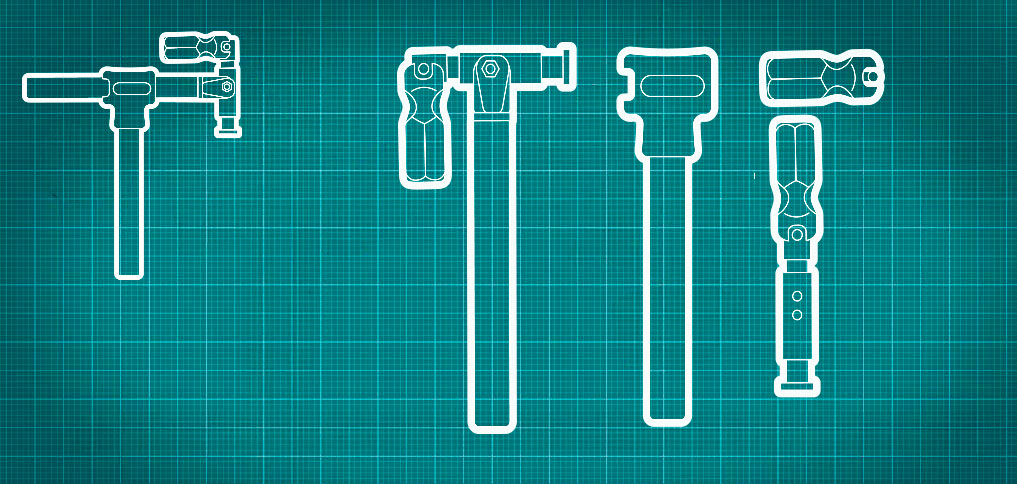
Now available for all 3 systems: Ø16, Ø22 and Ø28 mm
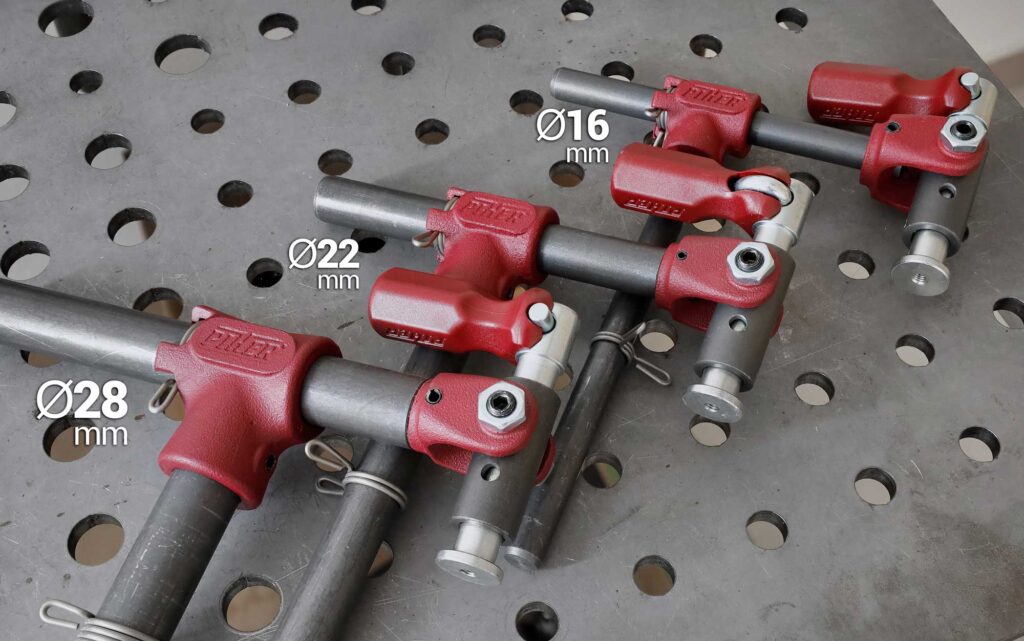
All these improvements have been implemented while maintaining full compatibility and the powerful piston clamping force that characterizes the series.
If you want to upgrade your welding table equipment or discover the new forged components and spring system up close, contact your nearest official PIHER distributor or consult the technical data sheet in our online catalog.
Be the first to comment
on "Updated TCP line of patented welding tables! Improved ergonomics, greater flexibility, and reduced environmental impact"